2026-05-19
Tabula 研發日記:一、緣起
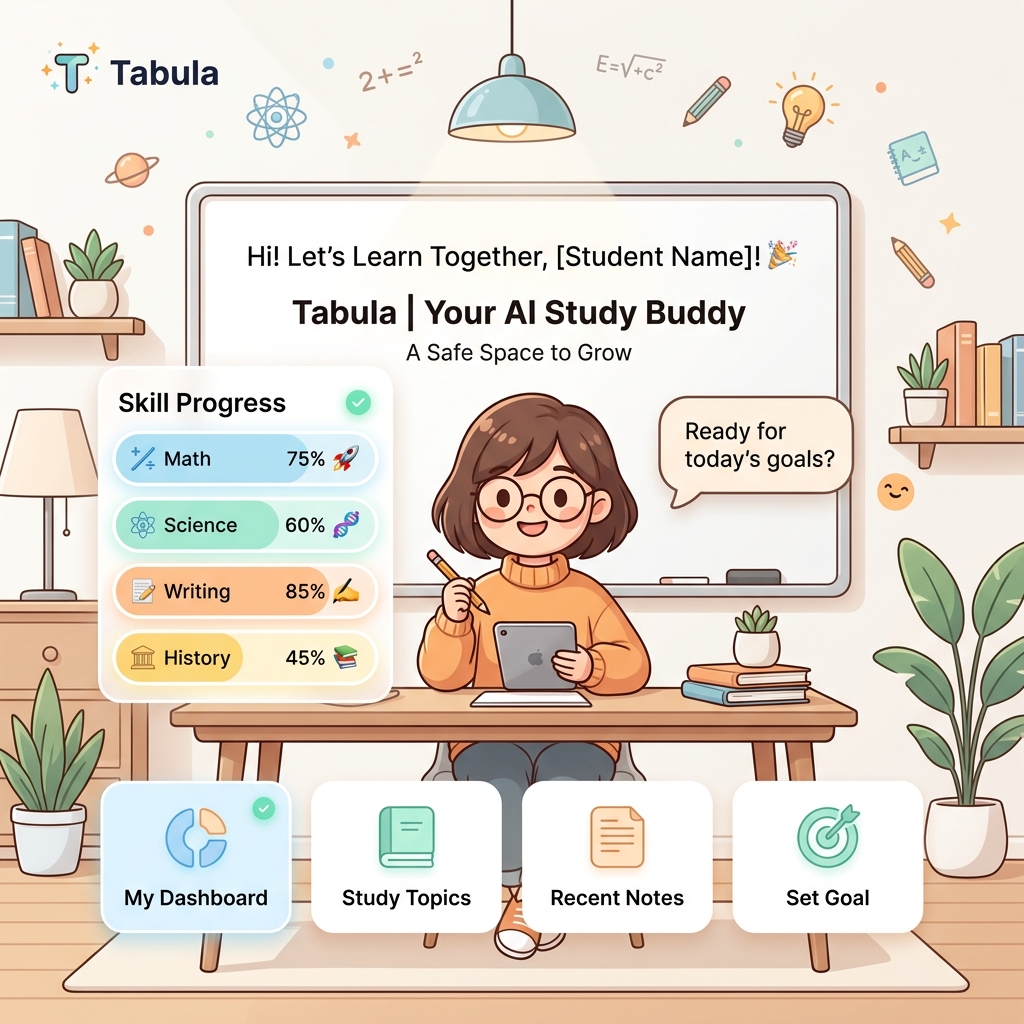
生成式 AI 的爆發讓知識的獲取變得前所未有地廉價。但作為教育者,我卻在課堂上看到了新的危機:當 AI 隨手就能給出完美答案時,學生的知識能動性正在被剝奪,他們失去了自己思考與主動學習的機會。
為了對抗這種窘境,我決定動手開發 Tabula。
Tabula 的名稱取自拉丁文的**「白板(Tabula Rasa)」。在軟體工程與教學設計的交界處,我做了一個激進的實驗:大部分的 AI 工具都強調如何用最快的速度為學生解決問題,然而,我反其道而行。在這裡,AI 不是無所不知的導師,而是一個思緒空白、但充滿好奇心的數位學生「Tabby」**。使用者必須扮演老師的角色,用最白話、不帶學術術語的語言,把概念解釋給它聽。
在過往的教學經驗中,我經常發現學生容易懂裝懂。即使老師在台上拋出問題:「同學們有問題嗎?」(其實這是一個無效的問題,但今天先不討論),同學們也常因為害怕被注視、被嘲笑,或是擔心「破壞課堂秩序」而選擇沈默。
後來,我經常在一對一教學時實施**「費曼教學法」**:由我主動扮演學生,讓我的學生負責把我教會;而我會在過程中不停地追問,幫助學生在教學的過程中發現自己的知識盲點與邏輯漏洞。這是一套非常有效的教學活動,能讓同學們很清楚地了解自己「已經知道什麼」以及「不知道什麼」(也就是後設認知)。然而,這在傳統的學校教育中卻非常難以實施。
為什麼費曼教學法這麼難以大規模實施?
我大致推算出了以下幾點原因:
- 人力問題(高師生比):傳統教學中一個老師要面對幾十位學生,老師根本沒辦法同時一對一地扮演每位學生的學生。
- 同儕教學的局限:即便讓學生互相教學,但學生通常未經過教學訓練,有時候甚至必須先花時間學習「如何實施費曼學習法」,才能有效進行互教。
- 提問者的重要性:如果被教學者只是被動接收訊息,費曼學習法的效果就會打折。一個好的問題能夠點醒教學者的知識盲點,然而在真實的教室裡,好的提問者往往是稀少的。
我們為什麼需要 Tabula?
因為 Tabula 很好地解決了上述問題。Tabula 運用了語言模型的原理,讓系統具備了基本常識,可以學習大部分的學科課題。透過特別設計的引導邏輯,Tabby 能勝任一位非常稱職的學生,有效刺激使用者的思考思路。
目前,Tabula 已經有了第一批數位學生的使用心得。以下是我這週某次將 Tabula 融入課堂的真實筆記:
【課堂實測紀錄】
今天我第一次把 Tabula 帶進課堂中,讓學生嘗試教會 Tabby 我們之前學過的知識。
這次的教學主題是:「如何用英文敘述一張圖片,讓另一個人可以凭空想像出這張圖片?」
學生 A 的互動表徵:
學生 A 在使用的過程中需要比較多的引導,一開始常習慣轉頭問我是不是對的。我鼓勵他直接跟 Tabby 交流,勇敢地犯錯。事實證明,Tabby 的人設非常支持學生的錯誤,不會給予評判。這位學生最後在教學的過程中,自己點出了敘述圖片時應該「先聚焦重點,再說明顏色與形狀」。A 覺得這種互動很酷,非常期待下次再與 Tabula 對話。
學生 B 的互動表徵:
原本課堂上容易分心的學生 B,這次的分心問題完全被解決了,他在過程中展現了高度的興趣。他不但完整地舉例了如何用英文進行敘述,還主動詢問我之後能不能繼續用 Tabula 來上課,甚至表示下次願意嘗試將 Tabula 切換成英文介面,挑戰用全英文與 AI 溝通。
根據這次的現場觀察,我認為 Tabula 1.0 的初步成功在於以下幾點:
- 溫暖好看的 UI:視覺上的舒適感可能最重要,甚至比功能本身更能降低學習的門檻。
- 進度條與成績單的設定:即時的推進反饋讓學生在完成教學時更有成就感。
- 擬人化的角色形象:Tabby 可愛的人設讓學生覺得像在跟朋友對話,沒有被評量的壓力。
- 高互動性:所有受測學生都認為,比起傳統的寫考卷考試,Tabula 更好玩、有趣,大家更願意主動投入。
Tabula 目前已經對外公開 1.0 版本,歡迎大家點擊連結試試看!
Tabula Development Diary: Part 1 - The Genesis
The explosion of generative AI has made knowledge acquisition cheaper than ever before. But as an educator, I saw a new crisis in the classroom: when AI can easily provide perfect answers, students' cognitive agency is being stripped away. They are losing the opportunity to think for themselves and learn proactively.
To combat this dilemma, I decided to build Tabula.
The name Tabula comes from the Latin phrase "Tabula Rasa" (blank slate). At the intersection of software engineering and instructional design, I conducted a radical experiment: Most AI tools emphasize how to solve problems for students as quickly as possible. However, I went the opposite way. Here, AI is not an omniscient tutor, but a digital student named "Tabby"—empty-minded but full of curiosity. Users must play the role of the teacher, using the most plain, jargon-free language to explain concepts to it.
In my past teaching experience, I often found students pretending to understand. Even when a teacher asks from the podium, "Does anyone have questions?" (which is actually an ineffective question, but let's not discuss that today), students often choose to remain silent out of fear of being stared at, mocked, or worried about "disrupting classroom order."
Later, I frequently implemented the "Feynman Technique" during one-on-one teaching: I would proactively play the student, letting my student take charge of teaching me. During the process, I would constantly ask follow-up questions to help the student discover their own knowledge blind spots and logical flaws. This is a highly effective educational activity that allows students to clearly understand what they "already know" and what they "don't know" (i.e., metacognition). However, this is extremely difficult to implement in traditional school education.
Why is the Feynman Technique so hard to scale?
I roughly deduced the following reasons:
- Manpower issues (high student-teacher ratio): In traditional teaching, one teacher has to face dozens of students. The teacher simply cannot simultaneously play the role of a student for each student one-on-one.
- Limitations of peer teaching: Even if students teach each other, they usually haven't received teaching training. Sometimes they even have to spend time learning "how to implement the Feynman Technique" first before they can effectively teach each other.
- The importance of the questioner: If the person being taught merely receives information passively, the effectiveness of the Feynman Technique diminishes. A good question can awaken the teacher's knowledge blind spots. However, in real classrooms, good questioners are often scarce.
Why do we need Tabula?
Because Tabula perfectly solves the problems mentioned above. By leveraging the principles of language models, the system possesses basic common sense and can learn most academic subjects. Through specially designed guidance logic, Tabby is capable of being a very competent student, effectively stimulating users' thought processes.
Currently, Tabula has gathered user feedback from its first batch of digital students. Below are my real field notes from integrating Tabula into the classroom this week:
[Classroom Observation Record]
Today, I brought Tabula into the classroom for the first time, asking students to try teaching Tabby the knowledge we had learned previously.
The teaching topic this time was: "How to describe a picture in English so that another person can imagine it out of thin air?"
Interaction Profile of Student A:
Student A needed more guidance during the process, initially habitually turning to ask me if they were right. I encouraged them to communicate directly with Tabby and be brave enough to make mistakes. As it turns out, Tabby's persona is very supportive of students' mistakes and does not pass judgment. During the teaching process, this student eventually pointed out on their own that when describing a picture, one should "focus on the main points first, then explain colors and shapes." Student A felt this interaction was very cool and is very much looking forward to talking with Tabula again next time.
Interaction Profile of Student B:
Student B, who is usually easily distracted in class, had their distraction completely resolved this time, showing high interest throughout the process. Not only did they comprehensively give examples of how to describe in English, but they also proactively asked me if we could continue using Tabula in future classes. They even expressed willingness to try switching Tabula to the English interface next time to challenge communicating with AI entirely in English.
Based on these on-site observations, I believe the initial success of Tabula 1.0 lies in the following points:
- Warm and beautiful UI: Visual comfort might be the most important factor, perhaps even more capable of lowering the learning barrier than the functionality itself.
- Progress bar and report card settings: Real-time progress feedback gives students a greater sense of achievement when they complete the teaching.
- Anthropomorphized character persona: Tabby's cute persona makes students feel like they are talking to a friend, without the pressure of being evaluated.
- High interactivity: All tested students felt that compared to traditional paper exams, Tabula is more fun and interesting, making everyone more willing to engage actively.
Tabula 1.0 has currently been released to the public. Welcome everyone to click the link and try it out!