2026-05-03
別讓 AI 成為另一道高牆:我與 Hiroki Terashima 的教育對話
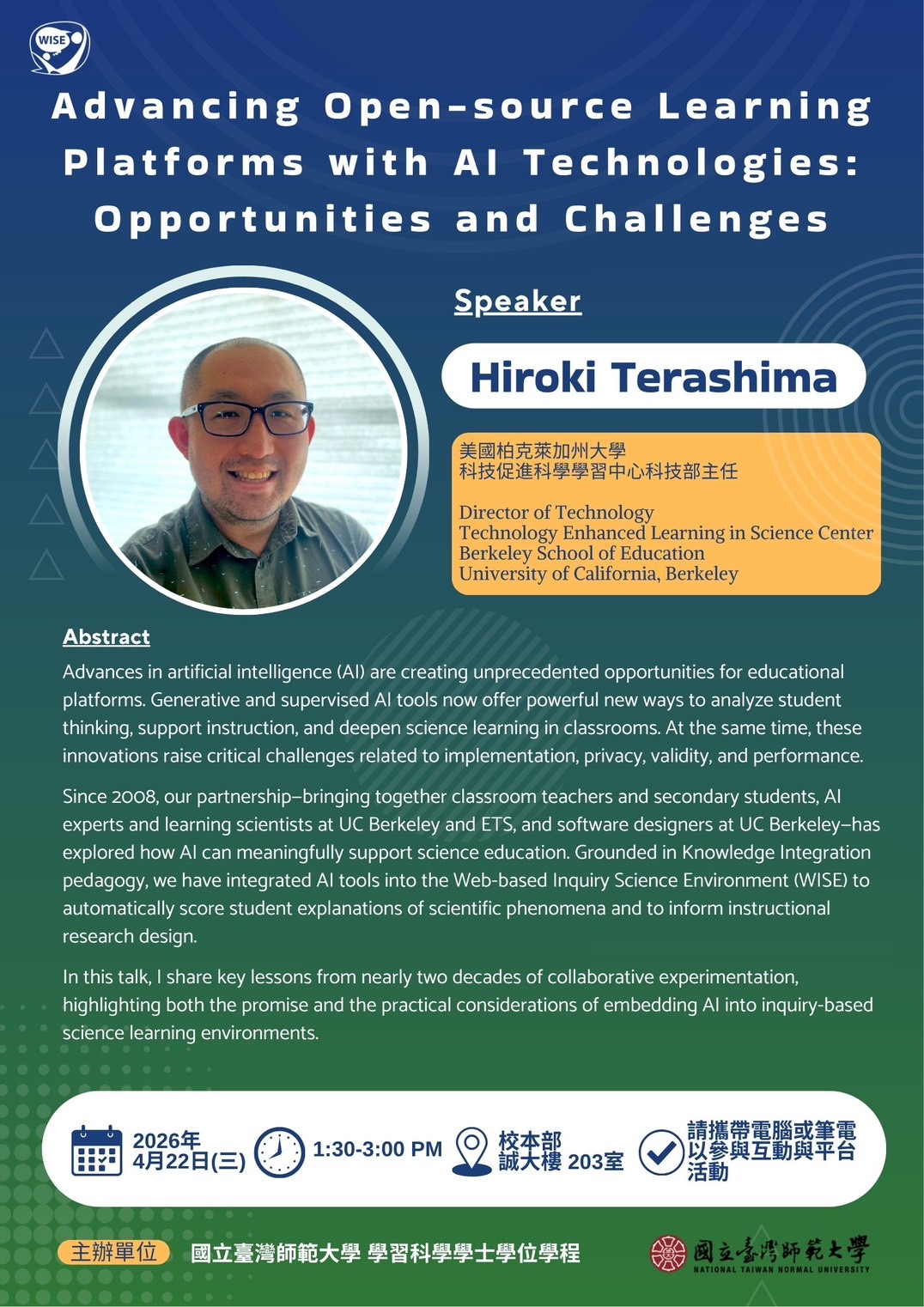
最近在 WISE 平台開發 AI 助教時,我正面撞上了一個隱形的障礙。
我的目標是讓助教能引導學生自主思考,而非直接給答案。但在實測中,我清楚看見了那份「隱形的語言稅」:同樣的邏輯,模型用英文對答如流,換成中文卻像變了個人。這是因為主流 LLM 的訓練資料仍以英文為主。我不禁焦慮:如果未來的教育由 AI 驅動,那不擅長英文的孩子,是否註定會被甩在後頭?
帶著這個疑問,我在台師大的講座後,找上了 WISE 平台創始人、柏克萊大學教授 Hiroki Terashima。
【多樣性設計:偏見的隱身斗篷】
我直言不諱地詢問 Hiroki:這種數據驅動的語言鴻溝,是否會讓教育資源更加不平等?
他的回答讓我當頭棒喝。他沒談演算法,而是談「人」。他說:
「多樣性設計(Diversity in Design)不是選項,而是必然。」
他解釋道,如果開發團隊背景單一,AI 的偏見就會像穿了「隱身斗篷」,消失在開發者的視線裡。唯有引入不同文化、不同母語的「守門人」,我們才能在模型傷害特定族群前,精準地揪出錯誤。在那場高層次的對話中,我感受到大腦全速運轉的「心流」,那是我對 EdTech 最純粹的熱愛。
【從硬體到系統:做時代的領頭羊】
令人驚喜的是,講座散場時,Hiroki 竟在人流中主動找到了我,交換聯絡方式並希望我持續分享見解。
從他身上我看到,EdTech 專家的價值不只是調校模型,而是讓科技具備「同理心」。當代的教育科技已從「電子白板」的硬體層面,跨越到 AI 系統的架構面。
我會繼續當那個敢於挑戰演算法的人,確保科技的進步是為了翻轉階級,而非加深鴻溝。
Beyond the Algorithm: A Dialogue on AI Equity with Hiroki Terashima
[The "Language Tax" Anxiety]
While developing an AI teaching assistant on the WISE platform, I encountered an invisible barrier.
My goal was to create an AI that guides students toward inquiry rather than just providing answers. However, I observed a recurring "Linguistic Tax": models that are articulate and logical in English often lose their nuance in Chinese. This data bias, rooted in English-centric training sets, keeps me up at night: If the future of education is AI-driven, are non-native English speakers destined to be left behind?
I took this concern to Professor Hiroki Terashima (UC Berkeley), the founder of WISE, during his session at NTNU.
[Diversity as a "Safety Feature"]
I asked Hiroki point-blank: Will this data-driven linguistic gap exacerbate educational inequality?
His response shifted my perspective entirely. He didn't talk about code; he talked about humanity.
"Diversity in Design is not a choice; it is a necessity," stated.
He explained that in a homogenous team, bias acts like an "invisibility cloak," undetected by those within the bubble. We need "gatekeepers" from diverse linguistic and cultural backgrounds to detect failures before they harm learners. Engaging in such a high-level exchange put me in a state of "flow"—a moment where my passion for EdTech felt more vivid than ever.
[The Future: Empathy-Driven Systems]
To my surprise, as the session ended, Hiroki sought me out in the crowd to exchange contact information, eager to hear more about my insights.
Hiroki embodies the true value of an EdTech expert: it’s not just about building "smarter" models, but building "empathetic" systems. Modern EdTech has evolved from hardware like smartboards into complex AI ecosystems.
I am committed to being the one who challenges the algorithm—not just as a developer, but as a pioneer ensuring that technology serves as a bridge, not a wall, for every learner.